
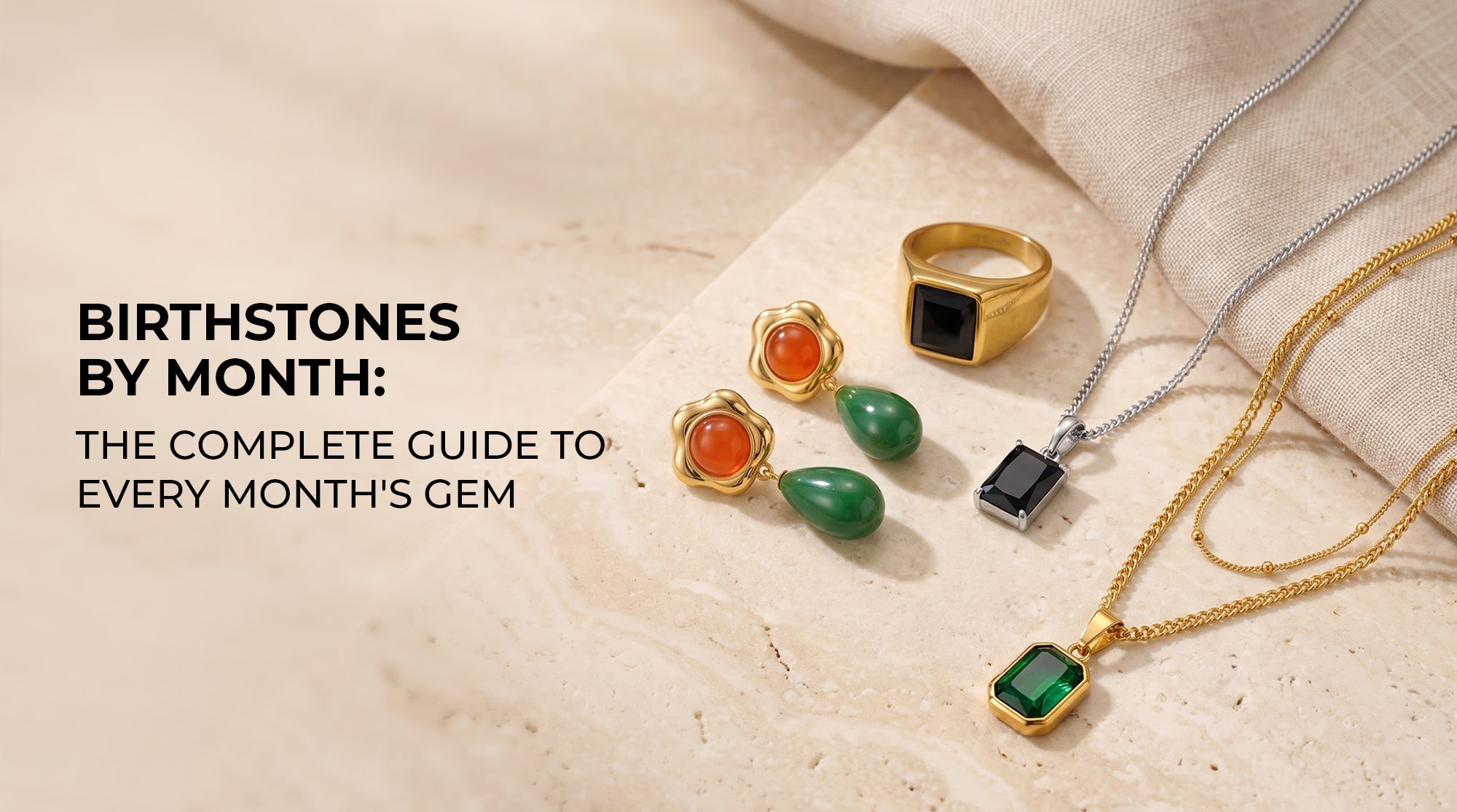
Most of us know our zodiac sign without a second thought. Our birthstone, though, tends to get a little less airtime even though the tradition behind it is older and arguably more personal. Each month carries its own gemstone, complete with centuries of history, symbolism, and meaning attached.
Whether you're looking up your own birthstone for the first time or shopping for someone whose birthday is coming up, this guide covers exactly what you need: the full month-by-month chart, where the tradition comes from, and what each stone is believed to represent.
What Are Birthstones? A Quick History
The idea of a gemstone tied to a specific month goes back further than most people expect. Its roots trace to the Breastplate of Aaron, described in the Book of Exodus, which featured twelve gemstones representing the twelve tribes of Israel. Over centuries, these twelve stones became linked first to the zodiac and eventually to the twelve months of the calendar year.
The birthstone list most of us recognize today isn't ancient, though it was formally standardized in 1912 by American jewelers, largely to create a consistent, marketable list. That modern list has stayed mostly intact since, with only minor updates along the way.
Interestingly, the stones and names used centuries ago don't always match what we associate with them now. What was once called "sapphire," for example, likely referred to what we know today as lapis lazuli, while ancient "diamonds" were probably white sapphire or white topaz. Color, rather than the specific mineral, was historically the defining feature of a birthstone which explains a lot of the overlap and confusion in older lists.
Birthstones by Month The Complete Chart
Here's the full modern birthstone list, along with what each stone is traditionally believed to symbolize.
January Garnet. A deep red stone linked to friendship, protection, and safe travel. Ancient warriors reportedly carried garnet into battle as a protective talisman.
February Amethyst. This purple gemstone has long been associated with clarity, wisdom, and calm. Ancient Greeks believed it guarded against overindulgence, and for a time, only royalty were permitted to wear it.
March Aquamarine. Named for its sea-blue hue, aquamarine symbolizes courage and serenity. Bloodstone is its traditional alternative.
April Diamond. The hardest known natural gemstone, diamond represents strength, clarity, and everlasting love which is exactly why it's become the default choice for engagement rings.
May Emerald. This vivid green stone symbolizes rebirth, wisdom, and a peaceful spirit, echoing the renewal that spring itself represents.
June Pearl (or Moonstone, Alexandrite). Pearls stand for purity and elegance, and unlike most birthstones, they come from a living organism rather than being mined. If you're shopping for a June birthday, our pearl collection is a natural place to start.
July Ruby. Deep red and associated with passion, vitality, and protection, ruby has historically symbolized courage earning it a reputation as the gem of warriors and monarchs alike.
August Peridot (or Spinel). This yellow-green stone is linked to strength and positive energy, believed to protect its wearer from negativity.
September Sapphire. Traditionally associated with wisdom, loyalty, and nobility, sapphire has been a favourite of royalty for centuries most famously in engagement rings.
October Opal (or Tourmaline). Opal symbolizes faithfulness and confidence; its name comes from the Latin for "precious jewel." It was once believed to protect eyesight when worn.
November Topaz (or Citrine). Warm, golden tones give both stones an association with abundance, confidence, and intellect.
December Turquoise (or Tanzanite, Zircon). A trio of blue-toned stones representing protection, good fortune, and calm a fitting close to the birthstone calendar.
Why Do Some Months Have More Than One Birthstone?
If you've noticed certain months listed with two or three stones, that's not a mistake it comes down to the difference between modern and traditional birthstone charts. The 1912 modern list is what most jewelers use today, but older, traditional lists sometimes assigned different stones to the same month. Bloodstone, for instance, was the original March birthstone before aquamarine became the standard. Neither version is wrong; the modern list has simply become the most widely recognized.
How to Style Your Birthstone
A birthstone doesn't need to be a grand, once-in-a-lifetime purchase to feel meaningful. A simple pendant, a subtle ring, or even a stack of stud earrings in your stone's colour can work into your everyday jewellery just as easily as any other piece. Pair it with the neutral, versatile pieces you already reach for daily, and let the birthstone be the one intentional detail that's entirely yours.
It's also one of the most personal gifting ideas available a birthstone piece tells someone you thought specifically of them, not just the occasion.
The Takeaway
Birthstones offer something most jewellery doesn't: a built-in story that's entirely personal to you. Whether you're drawn to January's garnet or December's turquoise, each stone carries centuries of meaning behind it making it one of the most thoughtful ways to choose a piece of jewellery, for yourself or as a gift.
Born in June? Explore our pearl collection and find a piece that celebrates your birthstone in a way you'll actually wear every day.
FAQs
What is my birthstone?
Your birthstone is determined by your birth month, following the modern birthstone chart standardized in 1912. Simply match your birth month to the list above to find yours.
Which gemstone belongs to each month?
January is garnet, February is amethyst, March is aquamarine, April is diamond, May is emerald, June is pearl, July is ruby, August is peridot, September is sapphire, October is opal, November is topaz, and December is turquoise.
What do birthstones symbolize?
Each birthstone carries its own traditional meaning garnet represents protection and friendship, amethyst symbolizes clarity and calm, emerald stands for renewal, and so on. These meanings are rooted in centuries of cultural and historical symbolism rather than scientific claims.
Can I wear a birthstone that isn't mine?
Yes. While birthstones are traditionally tied to your birth month, there's no rule against wearing any stone you're simply drawn to. Many people also wear a loved one's birthstone as a sentimental gesture.
Which birthstones are most valuable?
Value depends on rarity, clarity, and demand rather than the month itself. Diamond, emerald, ruby, and sapphire tend to command the highest prices among birthstones, particularly in larger, higher-clarity stones.















Share:
Everyday Jewellery Essentials Every Woman Should Own
Necklace Length Guide for Women & Men: Find Your Perfect Fit