
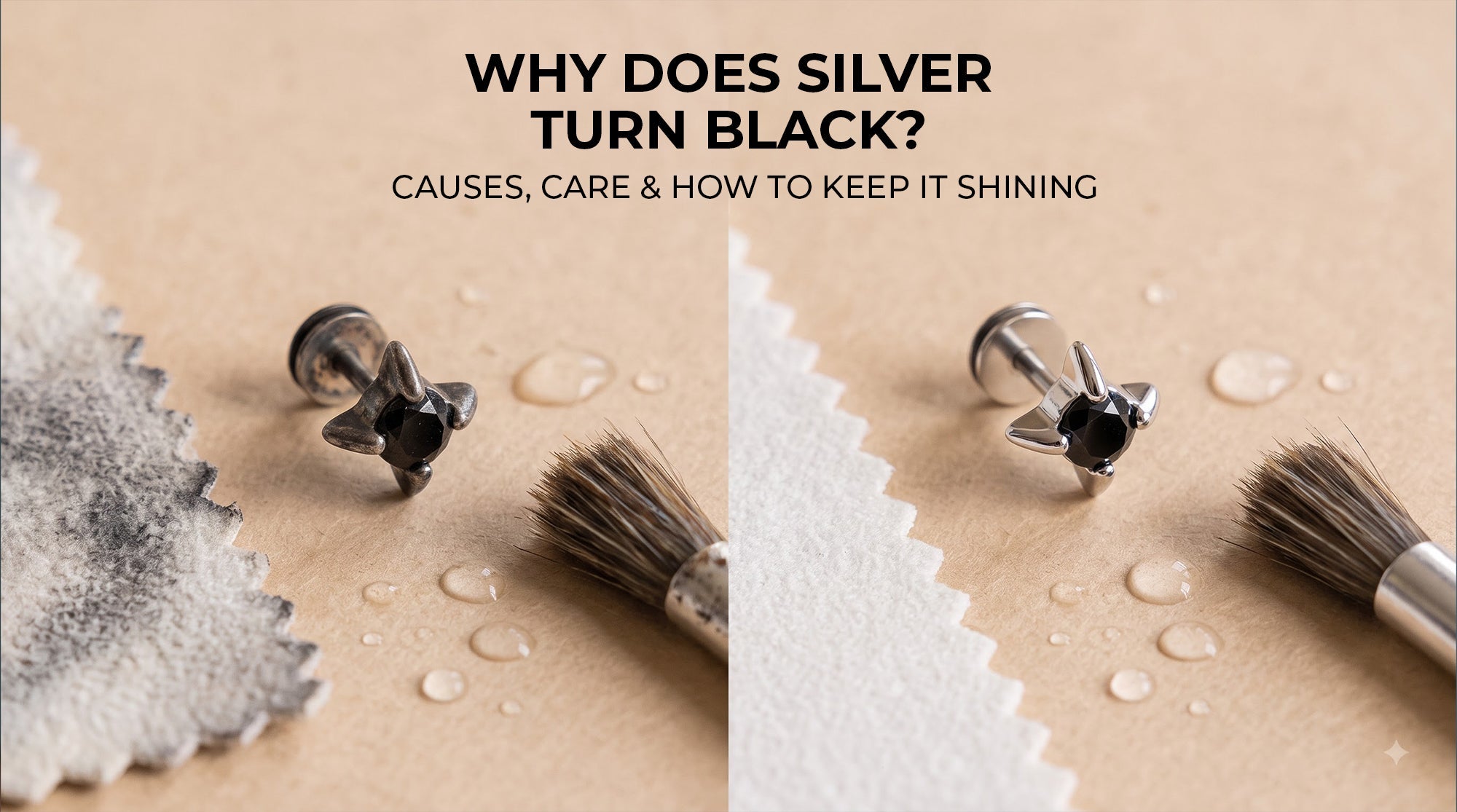
There's a specific kind of panic that hits when you open your jewellery box and find your favourite silver piece looking dull, dark, or almost blackened. The instinct is to assume something's wrong that it's fake, or ruined, or that you did something to cause it.
Take a breath. What you're seeing is called tarnish, and it's one of the most normal things that can happen to genuine silver. It's chemistry, not damage. Here's exactly why it happens, what actually speeds it up, and how to bring the shine right back.
What Tarnish Actually Is
Silver tarnishing is a chemical reaction, not a flaw. When silver comes into contact with sulfur compounds in the air, it forms a thin dark layer called silver sulfide on the surface of the metal. That's the black or grey discolouration you're noticing.
It isn't rust, and it isn't a sign of poor quality it's a surface-level reaction, which means it can be cleaned off and, to a large extent, prevented with the right habits.
What Causes Silver to Tarnish Faster
A few everyday factors speed up how quickly this happens:
Air and sulfur exposure. Even small traces of sulfur in the atmosphere react with silver over time. This is more noticeable in polluted or industrial areas, and in closed, poorly ventilated spaces like jewellery boxes and drawers.
Body chemistry and sweat. Sweat is naturally salty and slightly acidic, and it reacts with silver on contact. Skin chemistry varies from person to person, which is why the same piece can tarnish faster on one wearer than another, even with identical care.
Cosmetics and skincare. Perfumes, lotions, hairsprays, and deodorants all contain compounds that react with silver. Letting these settle on your skin before putting jewellery on makes a real difference.
Storage habits. Leaving silver exposed to open air especially in humid spots like bathrooms or piling pieces on top of one another accelerates both tarnishing and surface scratching.
Does Water Make Silver Tarnish?
Not directly but it plays a supporting role. Pure water on its own isn't the trigger for tarnish; sulfur is. What water does is speed up the reaction once sulfur is already present, especially if that water contains chlorine, salt, or other minerals. That's why swimming pools, seawater, and even prolonged shower exposure tend to dull silver faster than the occasional handwash.
Humidity works the same way it doesn't cause tarnish by itself, but it helps sulfur compounds interact with the metal more readily. The practical takeaway: a splash of water won't hurt your silver, but letting moisture linger against it regularly will.
Is Black Silver Damaged Permanently?
No and this is worth repeating, because it's the part people worry about most. Tarnish sits on the surface of the metal and doesn't compromise its structure or value. In fact, tarnishing is often a good sign: genuine, high-purity silver reacts with its environment precisely because it's real. Heavily plated or non-silver pieces tend to resist tarnish altogether, simply because there's little actual silver content to react.
So if your silver anklets for women or everyday chain have started to darken with wear, that's a sign they're doing exactly what genuine silver does not a reason to set them aside.
Can Tarnished Silver Become Shiny Again?
Yes, and restoring it is usually simpler than people expect. For light tarnish, a dedicated silver polishing cloth is often all it takes. For slightly more buildup, a gentle wash with mild soap and warm water, followed by thorough drying, works well. For deeper tarnish, a pH-balanced, ammonia-free silver cleaner designed specifically for jewellery is the safest bet.
What to avoid: toothpaste, lemon juice, baking soda, or vinegar. These are common "hacks" floating around online, but they're abrasive or acidic enough to scratch the surface or wear down detailing over time doing more harm than the tarnish itself.
If your piece has an oxidised or antiqued finish, treat it differently. That deliberate darkened detailing is part of the design, not tarnish to be scrubbed away clean it gently and sparingly to preserve the contrast.
How to Keep Silver From Tarnishing in the First Place
A few simple habits go a long way:
-
Store it right. Anti-tarnish pouches, zip-lock bags, or a soft cloth pouch limit air exposure. Silica gel packets in your storage box help absorb ambient moisture.
-
Wear it often. Silver that's worn regularly tends to tarnish more slowly than silver left untouched in a drawer.
-
Let products dry first. Apply perfume, lotion, and hairspray before putting your jewellery on, not after.
-
Take it off when needed. Remove silver before showering, swimming, exercising, or cleaning with harsh household products.
This kind of care matters most for pieces you wear daily like a silver payal that rarely comes off. A little consistency in how it's stored and worn keeps it looking new for far longer.
The Takeaway
Silver turning black isn't a defect it's proof of the real thing. With a bit of understanding and a few small habits, your silver can stay as bright as the day you bought it, for years of wear.
Ready to build a collection that's made to last? Explore our anklet collection and shop pieces designed for real, everyday shine.
FAQs
Why does silver jewellery become black?
Silver reacts with sulfur compounds naturally present in the air, forming a thin dark layer called silver sulfide on the surface. It's a normal chemical reaction, not a sign of damage or poor quality.
Can tarnished silver become shiny again?
Yes. Light tarnish can usually be buffed away with a polishing cloth, while more noticeable tarnish responds well to mild soap and water or a pH-balanced silver cleaner. Avoid abrasive home remedies like baking soda or lemon juice, as these can scratch the surface.
How do I prevent silver from tarnishing?
Store pieces in anti-tarnish pouches or airtight containers, wear them regularly, let skincare and perfume dry before putting jewellery on, and remove silver before showering, swimming, or exercising.
Does water make silver tarnish?
Not directly. Sulfur exposure is the actual cause, but water especially chlorinated or salty water speeds up the reaction. Occasional contact with clean water is fine as long as the piece is dried afterward.
Is black silver damaged permanently?
No. Tarnish is a surface-level reaction that can be cleaned off and doesn't affect the metal's structure or value. It's often a sign that a piece is genuinely made of silver rather than heavily plated.















Share:
How to Buy Jewellery Online Safely: A Complete Guide for Smart Shoppers
Everyday Jewellery Essentials Every Woman Should Own